Patch testing is the step everyone knows about and almost nobody does, usually because the new product is exciting and the instructions are on the back of the box in six-point type.
It is worth doing. Not because it guarantees anything — it does not — but because it dramatically reduces the size of the mistake when something does not suit you.
How to do it
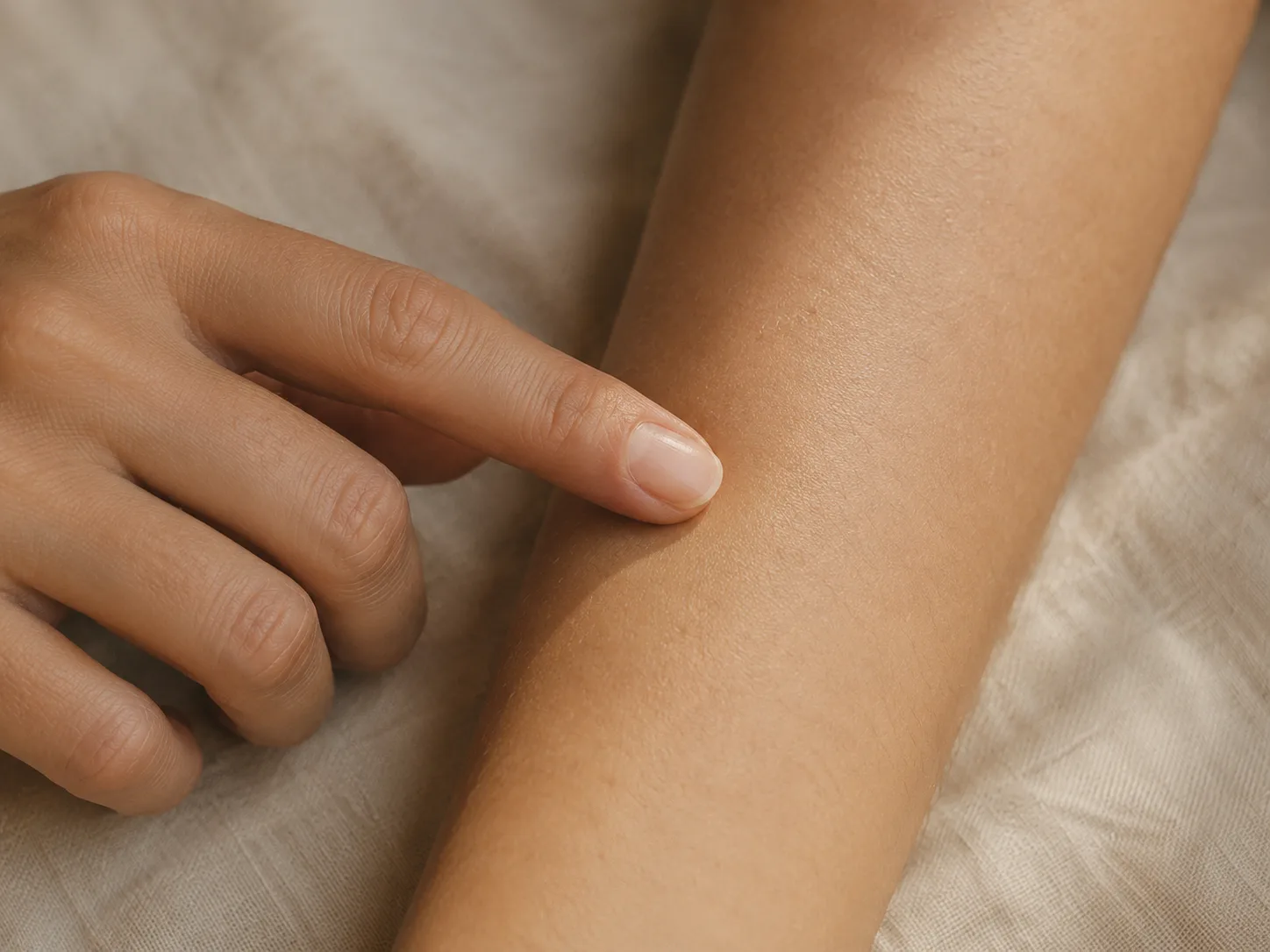
- Pick somewhere discreet with skin that behaves reasonably like your face: the inner forearm, or just in front of the ear along the jaw.
- Apply a small amount, the way you would actually use the product.
- Repeat it once a day for several days. A single application is a weak test — some reactions build with repetition rather than appearing immediately.
- Leave it alone between applications. No washing the spot with something else and calling the result confusing.
What counts as a reaction
Redness that does not settle within an hour or so, itching, small bumps, burning, or scaling. Mild, brief tingling with certain actives is common and not automatically a problem — but tingling that becomes stinging, or that lasts, is.
What patch testing cannot tell you
It will not predict congestion, which takes weeks to show and depends on how a product behaves across a whole face. It will not catch reactions that only appear with sun exposure. And a clear patch test does not mean the product will do anything useful for you — only that it is unlikely to cause an immediate problem.
When it matters most
Always worth it for anything strong, anything fragranced, anything you are trying because someone else's skin liked it, and anything at all if your skin has reacted badly before. If you have known allergies or a diagnosed skin condition, that is a conversation for a doctor or pharmacist rather than a forearm test.